Chess guide
About Chess
The steady, player-controlled pace in Chess makes score chasing the first priority and repeatable fundamentals the next one. Follow one method in Chess: move one piece at a time, watch the opponent threats, and build toward checkmate without exposing the king. The next retry in Chess should preserve what worked: compare the board before and after each move rather than changing several pieces at once.
Because Chess has a steady, player-controlled rhythm, the safest improvement is to repeat one reliable action before adding risk. If progress stalls, compare the current layout with the target and undo the last assumption that removed future options. Repeat the same setup in Chess once before deciding the correction failed.
Chess gameplay profile
- Objective
- Chess — open-source browser game by kbjorklu, self-hosted under the MIT license.
- Play style
- Classic with arcade
- Core skills
- score chasing, repeatable fundamentals
- Pace
- Steady, player-controlled
- Input
- See in-game instructions
- Best fit
- Players looking for a classic browser session
Games like Chess
These recommendations share one or more useful categories or control ideas.
To play Greedy Snake Multiplayer Duel, confirm both control sets, react to the shared objective, and score before the other player controls the key space.
Use this order in Canvas Tetris: move and rotate each falling piece so completed lines disappear without sealing useful gaps.
The core action in Breakout is direct: track the incoming ball, meet it with the paddle, and angle each rebound away from danger.
To play Minesweeper, compare the numbered clues around unopened cells and clear a square only when the mine pattern is logically safe.
When Pong begins, move the paddle into the ball path and use the contact point to send the return toward open space.
Follow one method in 2244 Number Match: place matching items together, merge them at the useful moment, and avoid filling every open slot.
To play Snake Block Rush, identify the action that raises the score, avoid the next hazard, and keep the run alive long enough to build momentum.
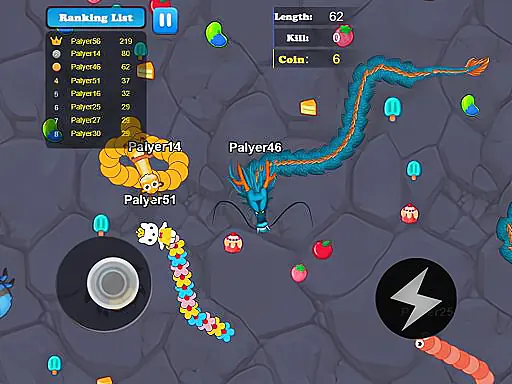
The main method in Tailoff.io: Snake Dragon Arena is simple: identify the action that raises the score, avoid the next hazard, and keep the run alive long enough to build momentum.